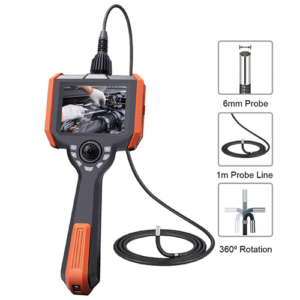
Thermal Imaging Tools
Engineering Measurement Systems for Mechanical and Structural Analysis
Material and structural testing systems are engineered devices designed to quantify mechanical, thermal, and structural properties of metals, polymers, composites, and other engineering materials. These instruments are essential for R&D, production quality control, and safety verification in critical industrial applications.
Primary product types include:
Universal Testing Machines (UTM)
Devices that measure tensile, compression, bending, and shear properties. UTMs quantify material strength, deformation, and elasticity under controlled loads.
Hardness Testers
Systems that evaluate surface hardness using Brinell, Rockwell, Vickers, or Shore scales. Critical for assessing wear resistance and component durability.
Impact and Fatigue Testers
Instruments that simulate repeated or sudden mechanical stresses to determine fatigue life and fracture resistance.
Thermal Analysis and Conductivity Instruments
Tools that assess thermal conductivity, expansion, and heat-induced deformation. Integration with thermal imaging enables visualization of stress concentration and energy distribution.
Non-Destructive Testing (NDT) Instruments
Devices including ultrasonic, radiographic, and acoustic emission sensors to detect internal defects or structural inconsistencies without damaging the sample.
Emissions and Stack provides systems engineered for precise measurement, robust durability, and reliable data output, supporting industrial process validation, structural certification, and material development programs.
Performance Features for Material and Structural Analysis
Material and structural testing instruments are designed to deliver high-resolution data across a range of temperatures, load conditions, and material types. Flexibility in configuration allows integration with thermal imaging, data acquisition platforms, and automated testing workflows.
Key capabilities include:
- Wide load ranges for tensile, compression, and bending tests
- High-speed sensors for dynamic and impact testing
- Precision alignment systems for reproducible measurements
- Thermal imaging integration for visualizing stress, strain, and heat flow
- Automated data acquisition with configurable sampling rates
- Modular fixtures for testing metals, composites, polymers, and hybrid structures
- Multi-parameter measurement combining mechanical, thermal, and dimensional analysis
- Digital and analog output interfaces including 4–20 mA, Modbus, and Ethernet
- Advanced software for data logging, reporting, and predictive modeling
- Configurable alarm and threshold settings for quality control and safety monitoring
These functional capabilities ensure precise structural evaluation under laboratory or production conditions, facilitating compliance verification, process optimization, and material research.
Real-World Use Cases in Mechanical and Thermal Assessment
Material and structural testing instruments are widely applied across industrial, aerospace, civil, and manufacturing sectors, including:
- Evaluating tensile strength of metals for aerospace and automotive components
- Measuring compression resistance in concrete and construction materials
- Assessing fatigue life of rotating machinery and critical mechanical parts
- Monitoring hardness and wear resistance in industrial tooling applications
- Analyzing thermal conductivity and expansion of heat-sensitive components
- Performing non-destructive inspections to detect cracks or voids in structural assemblies
- Conducting impact testing on polymer composites for safety certification
- Integrating thermal imaging to detect localized stress and deformation during loading
- Validating material specifications in R&D labs and prototyping facilities
- Supporting regulatory compliance testing for structural materials and industrial safety
- Measuring flexural properties of beams, plates, and composite panels
- Testing corrosion resistance and chemical exposure effects on material integrity
- Performing strain and stress analysis under operational or simulated conditions
- Evaluating wear and friction properties in moving mechanical components
- Conducting quality assurance checks for critical aerospace and defense structures
These applications demonstrate how precise material testing enhances structural reliability, process efficiency, and safety compliance.
Regulatory and Certification Frameworks for Engineering and Structural Applications
- ASTM E8/E8M (Tensile Testing of Metals)
- ASTM D638 (Tensile Properties of Plastics)
- ASTM E18 (Rockwell Hardness Testing)
- ASTM E23 (Impact Testing)
- ASTM E92 (Vickers Hardness Testing)
- ISO 6892 (Metal Tensile Testing)
- ISO 527 (Plastic Tensile Testing)
- ANSI/NSF Instrument Calibration Guidelines
- CSA C22.2 Electrical Safety Standards
- NFPA 70 National Electrical Code
Technical Differentiators for Mechanical, Thermal, and Structural Analysis
Emissions and Stack material and structural testing instruments are engineered for precision, durability, and data reliability. Key advantages include:
- High-resolution load cells and sensors for accurate tensile, compression, and flexural measurements
- Thermal imaging integration to visualize stress distribution and detect anomalies
- Multi-parameter measurement systems for simultaneous mechanical, thermal, and dimensional analysis
- Modular fixtures supporting metals, polymers, composites, and hybrid materials
- Automated data acquisition and reporting for regulatory compliance and process documentation
- Portable and benchtop configurations to accommodate laboratory and field testing needs
- Corrosion and wear-resistant components for long-term industrial operation
- Software-enabled predictive modeling for fatigue, deformation, and failure analysis
- Configurable alarms and thresholds for real-time monitoring of critical test parameters
- Expert technical support and consultation for material testing, sample preparation, and instrument optimization
These differentiators enable engineers and technicians to conduct reliable, repeatable testing for research, production quality control, and regulatory validation.
Alignment with Thermal Analysis and Process Optimization
Material and structural testing instruments complement thermal imaging tools to provide comprehensive insight into mechanical performance and heat-induced stress. Integration benefits include:
- Real-time visualization of stress and strain under applied loads
- Automated recording of mechanical and thermal parameters for documentation
- Support for predictive maintenance and process optimization in industrial systems
- Compatibility with data acquisition systems for synchronized multi-parameter analysis
- Modular setups for laboratory, field, and production testing environments
Integrating mechanical testing with thermal imaging ensures thorough material evaluation, reliable structural analysis, and data-driven decision-making.
For detailed product inquiries, technical consultation, or support regarding emissions and stack testers and measurement solutions, reach out to Emissions and Stack through our Contact Us page. Our team of experts is ready to provide guidance tailored to your operational requirements, helping you maximize measurement accuracy and process efficiency.
Showing 73–84 of 197 results
-
Thermal Imaging Tools
Emissions and Stack Night Driving Thermal Imaging Camera for Rugged Vehicle
Read more