Airflow & Anemometers
Environmental Measurement Solutions for Airflow & Anemometers
Environmental measurement instruments within airflow and anemometer systems provide precise quantification of air velocity, volumetric flow rate, temperature, humidity, and pressure conditions critical to emissions testing and stack diagnostics. These instruments support compliance-driven air monitoring, industrial exhaust characterization, and performance verification of ventilation and combustion systems.
High-accuracy airflow measurement devices are essential for validating stack discharge rates, calculating pollutant mass flow, and ensuring process integrity in industrial facilities. Environmental sensing platforms integrate calibrated anemometry, differential pressure measurement, and atmospheric correction algorithms to deliver defensible data for environmental reporting and engineering analysis.
Environmental monitoring solutions in this segment are engineered for rigorous field deployment across refineries, power plants, chemical processing units, and manufacturing facilities where traceable airflow and emissions measurements are mandatory. Accuracy, repeatability, and long-term sensor stability define system reliability in demanding regulatory environments.
Precision Airflow and Environmental Monitoring Devices for Emission Testing Applications
Environmental Measurement, within airflow and anemometer systems, refers to calibrated instrumentation used to quantify air velocity profiles, volumetric stack flow, ambient environmental parameters, and associated process conditions for regulatory and engineering purposes.
These product types typically include:
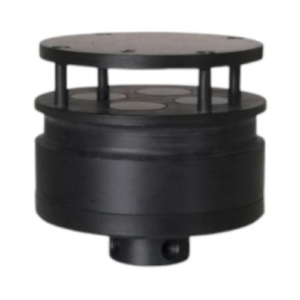
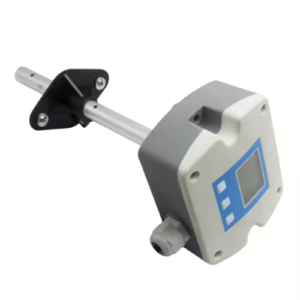
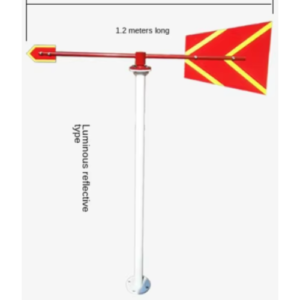
- Hot-wire and hot-film anemometers for low-velocity precision airflow measurement
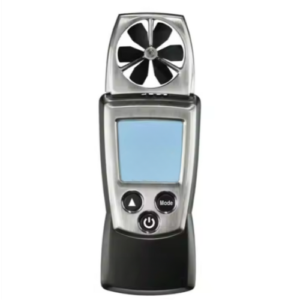
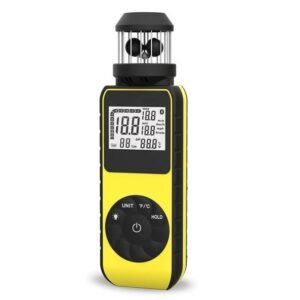
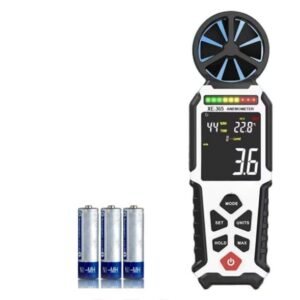
- Vane anemometers for medium to high airflow rate verification in ducts and stacks
- Pitot tube systems paired with differential pressure transmitters for stack flow profiling
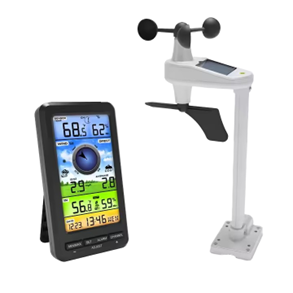
- Multi-parameter environmental meters integrating airflow, temperature, humidity, and barometric pressure
- Data-logging airflow monitors designed for compliance documentation and audit traceability
Measurement systems are commonly deployed for source emission testing, ventilation system validation, and environmental compliance verification under strict reporting frameworks. Assumptions regarding stack geometry, gas composition, and flow regime must be clearly defined during deployment to ensure defensible data acquisition.
Emissions and Stack has built a reputation for delivering advanced emissions and stack testing and measurement systems with strong technical validation. Our environmental airflow instruments are selected and configured to support industrial users who require reliable and repeatable environmental data under regulatory scrutiny across North America.
Engineered Environmental Monitoring Configurations for Stack and Process Airflow Analysis
Environmental airflow instrumentation must function reliably under variable temperature, pressure, and particulate conditions. Systems offered by Emissions and Stack are configured to support field engineers, environmental consultants, and compliance teams operating in high-demand industrial environments.
Core Functional Capabilities
- High-resolution velocity measurement with temperature compensation
- Automated volumetric flow calculations based on cross-sectional profiling
- Integrated differential pressure sensing for stack velocity determination
- Multi-point measurement capability to meet Method 1 and Method 2 style testing frameworks
- Real-time digital data logging with timestamped audit trails
- Field calibration support with NIST-traceable references
- Compensation algorithms for altitude and atmospheric pressure variations
Configuration Options
- Portable handheld instruments for spot verification
- Rack-mounted monitoring systems for semi-permanent installations
- Wireless data transmission modules for remote environmental monitoring
- Explosion-resistant housings for hazardous industrial zones
- Extended temperature probes for high-heat exhaust stacks
- Modular sensor heads for interchangeable airflow and environmental parameters
- Cloud-integrated reporting interfaces for compliance documentation
System integrators frequently configure airflow measurement systems with additional sensors such as gas analyzers and particulate monitors to provide comprehensive environmental diagnostics. Each configuration must be aligned with stack diameter, gas temperature, and anticipated velocity profile to ensure measurement validity.
Emissions and Stack leads through disciplined engineering practices, continuous product development, and strict quality assurance protocols. Our growing B2B presence across North America reflects measurable performance, documented reliability, and responsive technical support tailored to engineering teams.
Environmental airflow and monitoring instruments serve multiple compliance and operational functions across regulated industries. These applications require traceable, defensible data to withstand regulatory review.
- Stack flow verification for power generation facilities conducting annual emission compliance testing
- Exhaust airflow validation in petrochemical processing units during process optimization audits
- Air handling performance evaluation within pharmaceutical cleanroom ventilation systems
- Combustion air intake measurement for industrial boiler efficiency studies
- Environmental compliance documentation for cement manufacturing stack discharge testing
- Air velocity profiling during EPA reference method stack sampling campaigns
- HVAC airflow balancing for large-scale commercial and institutional facilities
- Ambient air movement monitoring in indoor air quality investigations
- Process ventilation validation within metal fabrication and welding operations
- Flue gas velocity determination for waste incineration emission reporting
- Flow verification supporting carbon capture pilot plant performance analysis
- Stack flow audits during facility expansion or permit modification reviews
- Environmental data acquisition during continuous emission monitoring system validation
- Air distribution efficiency studies in large warehouse and logistics centers
- Research-grade airflow measurement in university and government environmental laboratories
Each application demands clarity on sampling location, probe positioning, and correction factors to ensure measurement defensibility under environmental regulations.
Environmental airflow and stack measurement systems are commonly deployed under the following regulatory and technical frameworks:
- U.S. EPA Method 1
- U.S. EPA Method 2
- U.S. EPA Method 2C
- U.S. EPA Method 2F
- U.S. EPA 40 CFR Part 60
- U.S. EPA 40 CFR Part 75
- ANSI Z9.5 Laboratory Ventilation Standard
- ASHRAE Standard 111
- ISO 17025 Calibration Requirements
- CSA C22.2 Electrical Equipment Standards
- Environment and Climate Change Canada emission reporting frameworks
- National Pollutant Release Inventory reporting requirements
Selection and configuration of instrumentation must align with the applicable regulatory framework and facility permit requirements.
Measurement Integrity Designed for Regulatory Confidence
Environmental airflow instrumentation must provide defensible data, not just raw readings. Emissions and Stack systems emphasize engineering integrity across every deployment scenario.
High Measurement Accuracy and Stability
- Low drift sensor architecture for extended field use
- Thermal compensation algorithms minimizing ambient influence
- Precision differential pressure transducers with calibrated linearity
Field-Ready Durability
- Industrial-grade probe construction resistant to particulate abrasion
- High-temperature resistant components for stack exhaust environments
- Shock-resistant enclosures for field transport and deployment
Data Integrity and Traceability
- Secure digital logging with audit-ready export formats
- Calibration documentation aligned with ISO 17025 standards
- Time-synchronized datasets for cross-instrument validation
Engineering-Driven Support Model
Real-world deployment experience across North American industrial sectors informs our system configuration recommendations. Engineers frequently encounter non-ideal stack geometries, turbulent flow regions, or elevated moisture content. Measurement strategy must address these conditions proactively rather than reactively.
Emissions and Stack integrates research-driven product development with hands-on field insight. Strict quality assurance processes ensure instruments perform consistently under regulatory review. Customer-focused technical guidance assists procurement teams and system integrators in selecting configurations aligned with operational constraints and compliance obligations.
Growing adoption across regulated industries demonstrates our authority in advanced emissions and stack testing instrumentation. Environmental monitoring systems must operate reliably in complex industrial conditions. Our engineering discipline and validation protocols help businesses streamline testing workflows and maximize data credibility.
Engineering teams, environmental managers, and procurement professionals require dependable airflow and environmental monitoring systems that withstand regulatory scrutiny and operational demands. Emissions and Stack provides technical consultation, product configuration support, and ongoing assistance for advanced stack and environmental measurement deployments.
For detailed product information, integration guidance, or support inquiries, reach out through our Contact Us page to start a conversation with our technical team.
Showing 1–12 of 56 results
-
Airflow & Anemometers
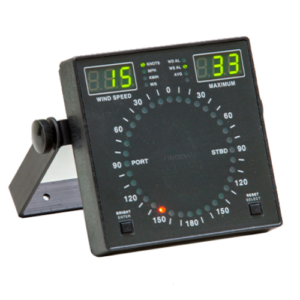
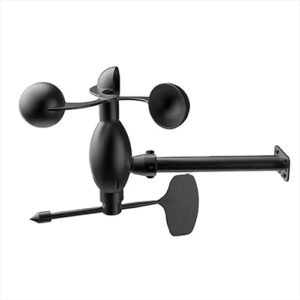
Compact Integrated Wind Speed and Direction Sensor – Emissions and Stack
Read more -
Airflow & Anemometers
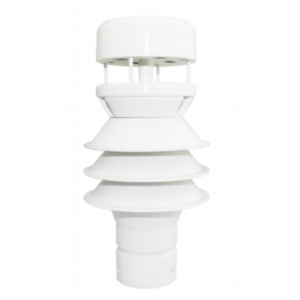
Compact Micro Ultrasonic 5-in-1 Weather Sensor – Emissions and Stack
Read more -
Airflow & Anemometers
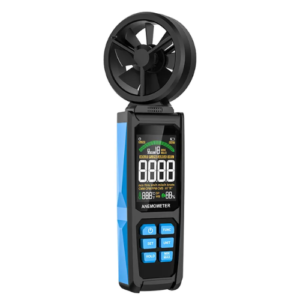
Digital Anemometer with Compact Lightweight Design – Emissions and Stack
Read more -
Airflow & Anemometers
Digital Anemometer with Temperature Measurement – Emissions and Stack
Read more