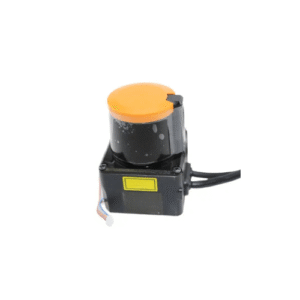
Motion & Position Sensors
Overview of Industrial IoT & Sensors for Motion and Position Intelligence in Emissions Measurement
Industrial IoT & Sensors within motion and position monitoring frameworks provide precise tracking of mechanical movement, actuator position, valve status, and structural displacement across emissions measurement infrastructure. These connected sensing devices combine encoders, proximity detectors, tilt sensors, and vibration transducers with industrial communication networks to deliver real time visibility into the mechanical integrity of stack testing equipment and continuous monitoring installations.
Motion aware sensing architecture is critical for maintaining probe alignment, verifying damper positions, tracking sampling arm movement, and validating automated calibration sequences. Networked position feedback ensures that data collected from exhaust streams correlates accurately with probe location and stack flow conditions. By integrating smart motion sensors with industrial telemetry and edge processing, facilities can reduce mechanical drift, detect abnormal vibration patterns, and strengthen defensibility of environmental reporting data derived from complex stack and ductwork configurations.
Defining Connected Motion and Position Sensing Devices for Emissions and Stack Measurement Systems
Industrial IoT & Sensors for motion and position monitoring refer to digitally networked sensing instruments engineered to measure displacement, rotation, vibration, alignment, and mechanical state within industrial emissions testing and stack monitoring environments. These devices provide feedback essential to maintaining measurement accuracy under dynamic operating conditions.
Key product types include:
Rotary and Linear Encoders
Precision encoders convert mechanical motion into digital signals for tracking probe insertion depth, actuator rotation angles, and automated sampling arm positioning. Absolute and incremental encoder options are available depending on reset tolerance and positional memory requirements.
Proximity and Limit Switch Sensors
Inductive, capacitive, and magnetic proximity sensors detect valve states, damper positions, and access door closure within stack assemblies. These sensors verify correct mechanical configuration before emissions sampling begins.
Vibration and Condition Monitoring Sensors
Accelerometers and velocity sensors measure vibration signatures of blower motors, extraction pumps, and stack mounted platforms. Condition monitoring data supports predictive maintenance of emissions measurement hardware.
Tilt and Inclinometer Sensors
Digital inclinometers measure angular deviation of stack platforms, sampling probes, and support structures. Tilt feedback ensures proper alignment of measurement devices relative to exhaust flow profiles.
Linear Displacement and Position Transducers
LVDTs and magnetostrictive position sensors provide high resolution displacement measurement for probe insertion mechanisms and automated calibration assemblies.
Industrial Wireless Motion Nodes
Battery assisted wireless modules transmit motion and position data from rotating or remote components where cabling is impractical or introduces mechanical stress.
Emissions and Stack designs motion aware sensor networks that complement advanced emissions and stack testing solutions, ensuring mechanical precision aligns with analytical measurement integrity.
Real Time Mechanical Feedback Integrated with Environmental Measurement Systems
Industrial IoT & Sensors within motion and position frameworks extend beyond simple signal generation. These intelligent devices integrate with emissions monitoring platforms to maintain mechanical and analytical synchronization.
High Resolution Position Tracking
Configurable resolution down to sub millimeter displacement or sub degree rotational increments enables:
- Accurate probe depth control within large diameter stacks
- Verification of multi point sampling grid alignment
- Repeatable positioning during compliance testing cycles
Resolution and sampling rates are selected based on stack geometry and expected mechanical tolerances.
Synchronized Motion and Emissions Data Logging
Position and vibration signals can be time stamped and synchronized with gas concentration and flow measurements. This correlation allows engineers to:
- Confirm stable probe placement during sampling intervals
- Identify vibration induced signal noise in analyzers
- Associate mechanical events with emission spikes
Edge data loggers aggregate motion data with environmental parameters to create a comprehensive measurement record.
Configurable Alarm and Interlock Integration
Industrial motion sensors can trigger alarms or interlocks when predefined thresholds are exceeded, including:
- Excessive vibration amplitude on sampling platforms
- Misalignment of automated calibration valves
- Unexpected probe retraction or over extension
These safeguards reduce risk of invalid data collection during regulatory reporting periods.
Environmental Hardening for Stack Environments
Stack and ductwork conditions may include elevated temperatures, corrosive gases, and high particulate loading. Motion and position sensors are configurable with:
- High temperature rated housings
- Stainless steel or coated components for corrosion resistance
- IP rated enclosures for outdoor installations
- Shock and vibration tolerant mounting assemblies
Engineering selection considers expected exhaust temperatures, chemical composition, and structural vibration characteristics.
Network Connectivity and Edge Processing
Support for Modbus, Ethernet based industrial protocols, and secure wireless telemetry allows motion data to integrate directly with plant control systems and centralized monitoring dashboards. Edge processing capabilities may include:
- Vibration spectrum analysis for early fault detection
- Position drift compensation algorithms
- Sensor self diagnostics and calibration status reporting
These capabilities enhance reliability of mechanical subsystems that underpin emissions testing infrastructure.
Through research driven product development and a disciplined quality assurance process, Emissions and Stack has strengthened its position as a trusted partner across North America for advanced emissions and stack testing and measurement solutions. Motion aware Industrial IoT & Sensors play a critical role in ensuring that analytical data reflects true process conditions rather than mechanical variability.
Practical Use Cases Across Regulated and Performance Driven Facilities
Industrial IoT & Sensors for motion and position monitoring are deployed in diverse operational scenarios, including:
- Tracking automated probe insertion depth during multi point stack testing to maintain representative sampling accuracy.
- Monitoring damper and valve positions in combustion exhaust systems for regulatory verification.
- Measuring vibration of stack mounted platforms to protect sensitive gas analyzers from mechanical drift.
- Confirming correct alignment of continuous emissions monitoring probes after maintenance activities.
- Supervising actuator movement within dilution and conditioning systems used for emissions analysis.
- Recording tilt and structural movement of tall stacks exposed to wind loading.
- Detecting excessive vibration in blower assemblies supporting extractive sampling systems.
- Validating interlock status before initiating compliance testing sequences in power generation plants.
- Logging displacement of movable sampling carriages during performance audits.
- Providing motion feedback for automated calibration gas switching assemblies.
Field deployments indicate that accurate motion feedback significantly reduces invalid test runs caused by mechanical misalignment or undetected structural vibration.
Regulatory and Certification Frameworks for Emissions Measurement Infrastructure
- United States Environmental Protection Agency Clean Air Act
- 40 CFR Part 60 New Source Performance Standards
- 40 CFR Part 75 Acid Rain Program
- 40 CFR Part 63 National Emission Standards for Hazardous Air Pollutants
- United States Environmental Protection Agency Performance Specification 1 through 8
- Environment and Climate Change Canada Multi Sector Air Pollutants Regulations
- Canadian Environmental Protection Act
- CSA C22.2 Industrial Control Equipment
- UL 61010 for Measurement and Control Equipment
- FCC Part 15 for Industrial Wireless Devices
Sensor selection and network architecture must align with these frameworks when motion data contributes to defensible environmental reporting.
Mechanical Integrity as a Foundation for Accurate Emissions Data
Mechanical stability directly influences the validity of emissions measurements. Even minor positional drift can alter sampling representativeness within non uniform flow profiles. Emissions and Stack integrates motion aware sensor networks to address this often overlooked risk.
Engineering differentiators include:
Integrated Mechanical and Analytical Design Approach
Motion and position sensing is not treated as an isolated accessory. System design considers:
- Stack diameter and expected flow stratification
- Probe insertion depth relative to sampling plane requirements
- Structural vibration induced by fans or process fluctuations
This holistic approach ensures mechanical precision supports analytical accuracy.
Predictive Maintenance Through Vibration Analytics
Vibration signatures from sampling pumps and support structures are analyzed to detect imbalance, bearing wear, or mounting degradation. Early intervention reduces unexpected downtime during scheduled compliance tests.
Redundancy for Critical Position Feedback
Dual channel encoders or redundant limit switches can be specified for mission critical installations where mechanical misalignment could compromise regulatory submissions.
Scalable Network Architecture
Facilities can deploy localized motion sensors for a single stack or expand to enterprise wide mechanical condition monitoring across multiple units. Modular communication gateways support incremental scaling without full system replacement.
Proven Deployment Across North American Industrial Sites
Emissions and Stack has developed a growing B2B presence across power generation, refining, cement manufacturing, and waste management sectors. Our experience demonstrates that motion and position intelligence strengthens overall reliability of advanced emissions and stack testing and measurement solutions.
Engineering teams rely on our expert guidance to configure sensor types, define sampling rates, and integrate mechanical feedback into existing control systems. Continuous improvement initiatives and rigorous validation testing underpin the durability and performance of our Industrial IoT & Sensors.
For detailed product inquiries, technical consultation, or support regarding emissions and stack testers and measurement solutions, reach out to Emissions and Stack through our Contact Us page. Our team of experts is ready to provide guidance tailored to your operational requirements, helping you maximize measurement accuracy and process efficiency.
Showing 1–12 of 228 results
-
Product successfully added to the Quote List
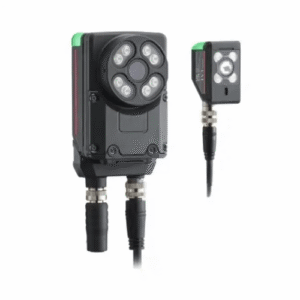
Motion & Position Sensors1-2.9 in CMOS Imaging System with Adjustable Exposure and Illumination – Emissions and Stack
Read more -
Product successfully added to the Quote List
-
Product successfully added to the Quote List
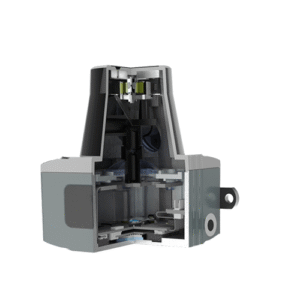
Motion & Position Sensors10600nm Laser Sensor, 1.2in Aperture, ±15V DC, 5A Power – Emissions and Stack
Read more -
Product successfully added to the Quote List
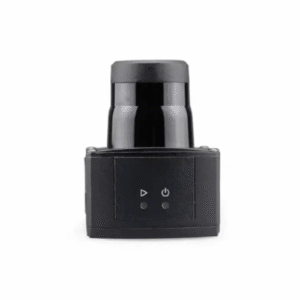
Motion & Position Sensors12m LiDAR Sensor with 1-1000Hz Frame Rate & UART Interface – Emissions and Stack
Read more -
Product successfully added to the Quote List
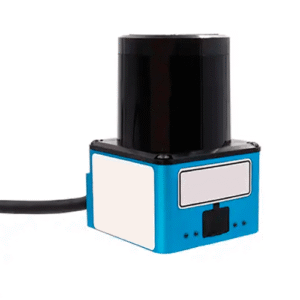
Motion & Position Sensors24V Auto Laser Distance Sensor, 5mm Resolution, -40°C to 85°C Range – Emissions and Stack
Read more -
Product successfully added to the Quote List
Motion & Position Sensors25m LiDAR Sensor with 1°-2° FOV & UART/IIC Interface – Emissions and Stack
Read more -
Product successfully added to the Quote List
Motion & Position Sensors270° Field of View Sensor, 24V Power, -58°F to 14°F Operating Temperature – Emissions and Stack
Read more -
Product successfully added to the Quote List
Motion & Position Sensors270° Field of View Sensor, 24V Power, -58°F to 14°F Operating Temperature – Emissions and Stack
Read more -
Product successfully added to the Quote List
Motion & Position Sensors270° FOV Photoelectric Sensor, Fixed Mount, 6V-36V, Industrial Automation – Emissions and Stack
Read more -
Product successfully added to the Quote List
Motion & Position Sensors270° Laser Scanner, 0.02m Accuracy, 20 Hz Rate, 905nm Wavelength – Emissions and Stack
Read more -
Product successfully added to the Quote List
Motion & Position Sensors270° Laser Sensor with Adjustable Detection and CAN BUS – Emissions and Stack
Read more -
Product successfully added to the Quote List
Motion & Position Sensors270° Laser Sensor, 0.06m to 30m Range, Ethernet Interface, 25ms Speed – Emissions and Stack
Read more