Proximity & Presence Sensors
Overview of Industrial IoT & Sensors for Intelligent Proximity Monitoring
Industrial IoT & Sensors within proximity and presence detection environments combine smart sensing devices, distributed edge nodes, and industrial communication frameworks to monitor object position, equipment status, and personnel access in critical emissions measurement zones. These networked sensing platforms support real time detection of stack access events, probe insertion depth, damper position, and maintenance activity around environmental monitoring assets.
Advanced sensing networks integrate inductive, capacitive, ultrasonic, infrared, and radar based proximity technologies with embedded processors and secure telemetry. Data from these intelligent field devices is transmitted to supervisory systems to support safe operation, accurate testing conditions, and documented compliance activities.
Connected proximity and presence sensors play a vital role in modern emissions and stack testing programs by ensuring measurement integrity, safeguarding personnel, and maintaining controlled testing environments across industrial facilities.
Defining Networked Proximity and Presence Sensors for Emissions Monitoring Infrastructure
Industrial IoT & Sensors in the proximity and presence domain refer to digitally enabled detection devices designed to identify the location, movement, or presence of objects and personnel within industrial environments where environmental measurement accuracy and safety are critical. Within advanced emissions and stack testing ecosystems, these devices form part of an integrated sensing architecture that validates physical conditions during monitoring operations.
Inductive Proximity Sensors for Metallic Component Detection
Inductive sensors generate electromagnetic fields to detect metallic objects such as stack access doors, probe assemblies, and damper mechanisms. Integrated digital outputs allow real time status reporting to edge gateways and plant control systems.
Capacitive Proximity Sensors for Material and Level Detection
Capacitive sensing devices detect both metallic and non metallic materials, supporting applications such as reagent tank presence confirmation, filter housing verification, and enclosure access monitoring.
Ultrasonic Presence Sensors for Distance and Obstruction Monitoring
Ultrasonic transducers emit high frequency sound waves to measure distance to target surfaces. These sensors are used to confirm probe insertion depth, stack liner clearance, and safe working distances during testing campaigns.
Infrared and Photoelectric Presence Detectors
Infrared and photoelectric sensors detect beam interruption or reflected light to monitor personnel access to restricted stack platforms and instrument shelters. Integrated IoT connectivity enables centralized logging of access events.
Radar Based Proximity Sensors for Harsh Environments
Millimeter wave radar sensors provide reliable detection in high temperature, dusty, or high moisture stack environments where optical technologies may degrade.
Wireless Presence Nodes and Smart Sensor Tags
Battery powered wireless modules equipped with proximity detection capability communicate through industrial wireless networks to provide flexible deployment across remote or difficult to access stack locations.
Emissions and Stack evaluates site specific factors such as temperature gradients, electromagnetic interference, and structural vibration when defining sensor selection criteria for each deployment.
Intelligent Detection and Data Integration within Emissions Measurement Programs
Industrial IoT & Sensors for proximity and presence detection deliver more than simple on or off signals. These systems are engineered to provide contextual data supporting advanced emissions and stack testing and measurement solutions.
Real Time Equipment Position Verification
Proximity sensors validate the operational status of:
- Stack dampers and isolation valves
- Sampling probe insertion and retraction mechanisms
- Access hatch closure before measurement runs
- Filter and scrubber component engagement
Digital feedback ensures that emissions testing occurs under controlled and documented conditions.
Personnel Presence Monitoring for Safety and Compliance
Presence sensors integrated with IoT gateways enable:
- Restricted area monitoring around high temperature stacks
- Logging of technician entry during compliance testing
- Integration with lockout tagout systems
- Remote visibility of maintenance activity
Assumption: Facilities with multiple vertical stacks benefit from automated presence tracking to reduce unauthorized access risk.
Edge Processing and Event Based Logging
Embedded microcontrollers within sensor nodes support:
- Time stamped event logging
- Configurable detection thresholds
- Debounce filtering for vibration heavy environments
- Local buffering during temporary network interruptions
Event driven data architecture reduces unnecessary bandwidth consumption while maintaining traceable records.
Industrial Network and Protocol Integration
Industrial IoT & Sensors support:
- Modbus RTU and Modbus TCP
- Ethernet IP
- OPC UA
- Digital discrete outputs to PLC inputs
- Secure MQTT telemetry for centralized dashboards
Integration flexibility simplifies incorporation into distributed control systems and environmental data management platforms.
Hazardous Area and High Temperature Configurations
Proximity and presence devices are available in:
- Explosion proof housings rated for classified zones
- High temperature tolerant enclosures for stack perimeters
- Corrosion resistant materials for acidic exhaust environments
- IP rated designs for outdoor installations
Engineering validation considers stack surface temperatures, ambient humidity, and particulate loading to ensure long term reliability.
Through research driven product development and strict quality assurance practices, Emissions and Stack has established itself as a trusted leader in delivering advanced emissions and stack testing and measurement solutions across North America.
Deployment Scenarios Supporting Emissions and Stack Integrity
Industrial IoT & Sensors for proximity and presence detection are applied across diverse industrial contexts:
- Monitoring stack access hatch closure before regulatory emissions testing begins to ensure valid measurement conditions.
- Detecting sampling probe insertion depth to confirm compliance with standardized stack testing methodologies.
- Verifying damper position during combustion optimization studies in utility boiler operations.
- Logging technician presence on elevated stack platforms for safety documentation and audit readiness.
- Detecting unauthorized entry into instrument shelters housing continuous emissions monitoring equipment.
- Confirming filter housing engagement in particulate control systems prior to emissions sampling.
- Monitoring reagent tank presence and level sensor installation in flue gas treatment units.
- Tracking equipment removal or tampering within environmental monitoring enclosures.
- Supporting short term compliance assessments by documenting physical configuration of stack hardware.
- Integrating presence detection with automated shutdown logic in hazardous emission zones.
Experience across power generation, refining, cement production, waste incineration, and chemical processing facilities informs sensor placement strategies and communication architecture design.
Regulatory and Certification Frameworks Affecting Proximity and Presence Detection Systems
Applicable standards and regulations include:
- United States Environmental Protection Agency Clean Air Act
- 40 CFR Part 60 New Source Performance Standards
- 40 CFR Part 75 Acid Rain Program
- 40 CFR Part 63 National Emission Standards for Hazardous Air Pollutants
- Occupational Safety and Health Administration standards for industrial safety
- National Fire Protection Association NFPA 70 National Electrical Code
- Canadian Environmental Protection Act
- Environment and Climate Change Canada regulatory frameworks
- CSA C22.2 Industrial Control Equipment Standards
- UL Hazardous Location Equipment Certifications
- FCC Part 15 for wireless communication devices
Compliance alignment must be evaluated during system design to ensure admissibility of operational records and environmental data.
Precision Detection in Harsh Stack Environments
Proximity and presence detection around stack systems presents unique challenges including thermal expansion, vibration from draft fans, and airborne particulates. Engineering differentiators include:
- Temperature compensated sensing elements to maintain detection accuracy near heated ductwork
- Vibration resistant mounting hardware designed for tall stack structures
- Shielded cabling and electromagnetic compatibility controls
- Self diagnostics for sensor health monitoring
Such design considerations reduce false positives and maintain reliable event tracking.
Integrated Architecture Supporting Environmental Data Integrity
Proximity data becomes meaningful when correlated with emissions measurements. Industrial IoT & Sensors are architected to:
- Synchronize detection events with gas concentration readings
- Provide contextual metadata for each testing interval
- Support audit trails linking physical configuration to recorded emissions values
Data correlation strengthens defensibility during regulatory reviews.
Scalable and Modular Deployment Models
Facilities can deploy proximity sensors incrementally as part of broader environmental modernization programs. Modular gateways, pluggable communication modules, and firmware update capability enable future expansion without full system replacement.
Field Proven Engineering Methodology
Emissions and Stack works directly with plant engineers, environmental managers, and system integrators to:
- Conduct on site hazard assessments
- Identify critical detection points impacting measurement validity
- Validate wireless signal propagation around steel stack structures
- Commission systems with documented acceptance testing procedures
Growing B2B presence across North America reflects our focus on technology innovation, product reliability, and customer focused support. Businesses rely on our expertise to streamline operations and unlock the full potential of connected sensing and measurement infrastructure.
For detailed product inquiries, technical consultation, or support regarding emissions and stack testers and measurement solutions, reach out to Emissions and Stack through our Contact Us page. Our team of experts is ready to provide guidance tailored to your operational requirements, helping you maximize measurement accuracy and process efficiency.
Showing 1–12 of 34 results
-
Proximity & Presence Sensors
120° Wide Angle Sensor, CR2450 Battery, ABS, 14-131°F, 3.31×1.34 in – Emissions and Stack
Read more -
Proximity & Presence Sensors
15 FPS 3D Scanner with LED Light Broad Object Range 0.07in Measure – Emissions and Stack
Read more -
Proximity & Presence Sensors
2.4 GHz Device, USB 5V/AAA 3V Power, ≤15mA Current, 2.36×2.36×1.29 in – Emissions and Stack
Read more -
Proximity & Presence Sensors
85 dB Alarm, Wi-Fi/Bluetooth/NB-IOT, ABS, 2xAAA Battery, 2.71×2.08 in – Emissions and Stack
Read more -
Proximity & Presence Sensors
Advanced Motion Sensor with Wide Detection and Smart Features – Emissions and Stack
Read more -
Proximity & Presence Sensors
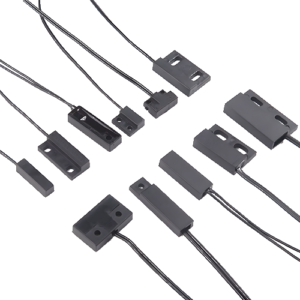
Advanced Multi Magnetic Switch Contact Proximity Sensor System – Emissions and Stack
Read more -
Proximity & Presence Sensors
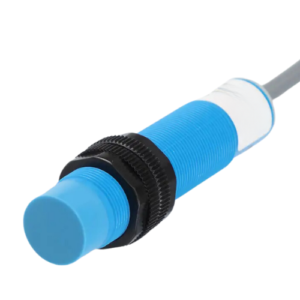
Cylindrical Shape Capacitive Water Level Proximity Sensor – Emissions and Stack
Read more -
Proximity & Presence Sensors
Detection Presence of IoT Smart Building and NFC Configurable – Emissions and Stack
Read more -
Proximity & Presence Sensors
High Sensitivity 24 GHz Millimeter Wave Presence Sensor – Emissions and Stack
Read more -
Proximity & Presence Sensors
Inductive Door Proximity Sensor with IP67 Waterproof – Emissions and Stack
Read more -
Proximity & Presence Sensors
Inductive Proximity Sensor for Presence Detection – Emissions and Stack
Read more -
Proximity & Presence Sensors
Inductive Proximity Sensor M12 Relay Type Metal Detection Switch – Emissions and Stack
Read more